
10 Branches. 25+ Partner Connections. One CargoWise Operating Model.
How SFL Tech helped an international logistics provider replace a legacy TMS, connect 25+ logistics partners and establish a common operating environment across 10 branches.
The client was preparing to expand into new countries across the Indian Subcontinent. But its existing operation was already carrying a systems problem that would become more expensive with every new branch.
The company ran on a legacy logistics platform while many of its international partners operated on CargoWise. Shipment information moving between the two environments often had to be entered again. Teams relied heavily on email to coordinate activity. Additional manpower was required simply to keep information aligned between organisations.
At the same time, management wanted greater control across the growing business: one view of operations across offices, stronger continuity for distributed teams, and a more digital experience for customers who increasingly expected to obtain rates, book, track and manage shipments online.
The business was ready to expand. Its operating environment was not.
The Client
The client is an international logistics solutions provider with operations in India and the United States and a commercial model built around overseas partnerships.
Those partnerships extend the company’s reach and are central to how it competes. As the organisation prepared to establish additional offices across the Indian Subcontinent, it needed the internal operation and the external partner network to work with far greater consistency.
The technology decision therefore carried more weight than simply replacing an ageing system.
The company needed a platform capable of supporting a wider branch network, connecting more effectively with its partners, giving management a consolidated view across locations, and providing customers with more direct digital access to the freight operation.
The Problem: Growth Was Multiplying Work Between the Systems
The most immediate constraint sat between the client’s legacy platform and the CargoWise environments used by many of its partners.
Information already entered on one side frequently had to be recreated on the other. Shipment data moved between systems through manual intervention. Communication around transactions depended heavily on email. As partner activity increased, so did the operational effort required to keep both sides aligned.
For a logistics company whose growth model depended on building strong international partnerships, that created an obvious contradiction: the network that expanded the company’s commercial reach was also increasing the work required to operate it.
The planned branch expansion raised the stakes further.
New offices could not simply become additional versions of the same model. Leadership wanted one macro view of the business across countries. Branches needed to work from a common platform and a more consistent set of processes. Teams needed stronger continuity when operating remotely. Critical activity had to move through the system rather than remain dependent on email chains and individual knowledge.
Customer expectations were changing at the same time.
The company wanted customers to obtain rates, make bookings, track shipments, manage orders and access payment-related information through a digital environment. But that experience could not be built credibly on top of fragmented internal processes. The information presented to customers first had to come from a connected and dependable operating environment.
The transformation therefore had four clear priorities:
- Replace the legacy platform before its limitations spread across additional branches
- Reduce duplicate handling across the partner network
- Move more execution into controlled, system-led workflows
- Create a digital customer layer connected to the freight operation behind it.
This was no longer simply a software migration. It was the technology foundation for the next stage of the business.
The SFL Solution: Designing CargoWise Around the Future Operation
SFL Tech became involved before implementation began.
The first step was not configuration. It was understanding what the business needed CargoWise to enable.
SFL worked through the client’s operating requirements across forwarding, finance, partner connectivity, workflows, management visibility and customer interaction, then mapped those requirements against CargoWise capability.
That early assessment was critical because a legacy-system migration can easily become a replication exercise: the old processes are reproduced inside a new platform and the same inefficiencies survive with a different interface.
SFL took a different approach.
The implementation was designed around how the organisation needed to operate as it expanded — across more branches, more partner relationships and a more digital customer experience.
The client subsequently appointed SFL to lead the wider transformation across implementation, integrations, workflow automation, staff enablement, customer-facing digital development and ongoing support.
SFL’s role therefore extended beyond deploying CargoWise. It was to ensure the platform, processes and surrounding integrations worked together as one operating environment.
1. Establishing One CargoWise Environment Across 10 Branches
SFL implemented CargoWise across 10 branches, replacing the legacy environment with a common platform for the wider operation.
Five core functional areas were brought into scope, spanning Freight Forwarding, Finance, Purchase Order Management, Rates & Tariffs and broader management requirements.
The important decision was not simply to install the same application in multiple offices. SFL needed to establish enough common structure across those branches that the business could operate and manage them as one network.
That meant aligning operational and financial information, defining how processes should move through the system, and ensuring management could see the organisation without having to reconcile separate technology environments afterwards.
For a company preparing to add more locations, that created a very different starting point.
A new office could be brought into an established CargoWise environment rather than becoming another technology island that would later need to be connected back to the rest of the business.
2. Connecting the Partner Network
The client’s partner model was commercially important, but the technology around it was creating unnecessary operational work.
Many partners already operated on CargoWise while the client remained on a separate legacy platform. Information passing between the two environments therefore required repeated manual handling.
SFL connected more than 25 logistics partners into the transformed environment.
The significance of that work went beyond system connectivity. The client’s international partner network was an extension of its service capability, so the integration strategy had to support the same commercial model.
By reducing the need to recreate shipment information between organisations, SFL removed friction from the relationships the client relied on to broaden its reach.
The network could grow without every additional partner automatically bringing the same increase in duplicate data handling behind it.
3. Moving More Operational Control Into CargoWise
The client also wanted to reduce its dependence on email and strengthen continuity across distributed teams.
A significant amount of operational coordination was still being carried through individual inboxes. That made process execution dependent on people knowing what had happened, what needed to happen next and who was responsible for moving the work forward.
SFL introduced workflow automation within CargoWise so more routine activity could be triggered and managed within the operating platform itself.
The objective was not to remove people from the operation. It was to remove unnecessary dependence on people manually carrying predictable work from one stage to the next.
That gave the business a clearer operational record, stronger ownership across locations and less reliance on information sitting inside personal email chains.
It also created a better basis for remote working and business continuity because the process remained visible inside the operating environment regardless of where individual employees were working.
4. Extending the Transformation to the Customer
The programme also changed how customers interacted with the business.
The client wanted customers to access rates, place bookings, track shipments, manage orders and use payment-related functionality through a digital environment.
SFL developed the website and customer portal as part of the wider transformation, ultimately delivering five digital tools across the customer journey.
This was important because the customer experience was not treated as a separate front-end exercise.
Rates depend on reliable rate data. Shipment visibility depends on operational events being captured correctly. Online bookings only create efficiency if they enter the freight process cleanly. Order management depends on the integrity of the information behind it.
By developing the customer layer alongside the CargoWise implementation, partner connectivity and workflow automation, SFL connected the digital experience to the operation underneath it.
The result was not simply a more modern interface.
Customers gained a more direct route into a freight operation that was itself becoming more connected.
5. Embedding the Change Across the Business
More than 30 CargoWise licences were deployed and 100% of employees in scope were trained on CargoWise.
For a multi-branch implementation, adoption is not a secondary workstream. The platform only creates consistency when the people using it understand how their roles fit into the new process.
SFL therefore supported the organisation through the transition rather than treating training as a final administrative step.
The objective was to move users away from legacy-system habits and manual workarounds and into the operating model that had been designed around CargoWise.
SFL also remained involved after go-live through ongoing Helpdesk support, giving the client continued access to CargoWise expertise as the environment moved into live operation and the business continued to expand around it.
The implementation established the new environment. Ongoing support helped keep it working as intended.
The Results
This programme replaced more than a legacy logistics system.It changed the architecture through which branches, partners, employees and customers interacted with the business.
10 Branches brought onto CargoWise
25+ Logistics partners connected
30+ CargoWise licences deployed
100% Staff in scope trained on CargoWise
5 Core functional areas implemented
5 Digital tools delivered across the customer experience
The 10-branch rollout moved the company away from expanding on separate technology foundations and established one CargoWise environment across the network.
The 25+ partner connections addressed the duplicate-entry problem at the centre of the original requirement, reducing the need for teams to manually bridge the gap between incompatible systems.
Workflow automation moved more operational execution into CargoWise, strengthening visibility and reducing dependence on email-led coordination across distributed teams.
The five customer-facing digital tools extended the transformation outward, giving customers greater direct access to rates, bookings, tracking, order management and related shipment activity.
And training across 100% of employees in scope gave the company the capability to operate the new environment consistently rather than simply having the technology available.
Most importantly, growth no longer had to reproduce the problems of the legacy model. The company could add branches, partners and digital services onto a more connected operating foundation rather than building new workarounds around each one.
From System Migration to a Platform for Expansion
The original constraint looked technical.
A legacy system could not communicate effectively with the CargoWise environments used by the company’s partners.
But that incompatibility exposed something larger.
The business was preparing to become more distributed at exactly the point when its operating model needed to become more unified. More countries would mean more people, more partners, more customer interactions and more information moving across organisational boundaries. Without intervention, every one of those additions risked adding another manual dependency.
SFL addressed the transformation at that level.
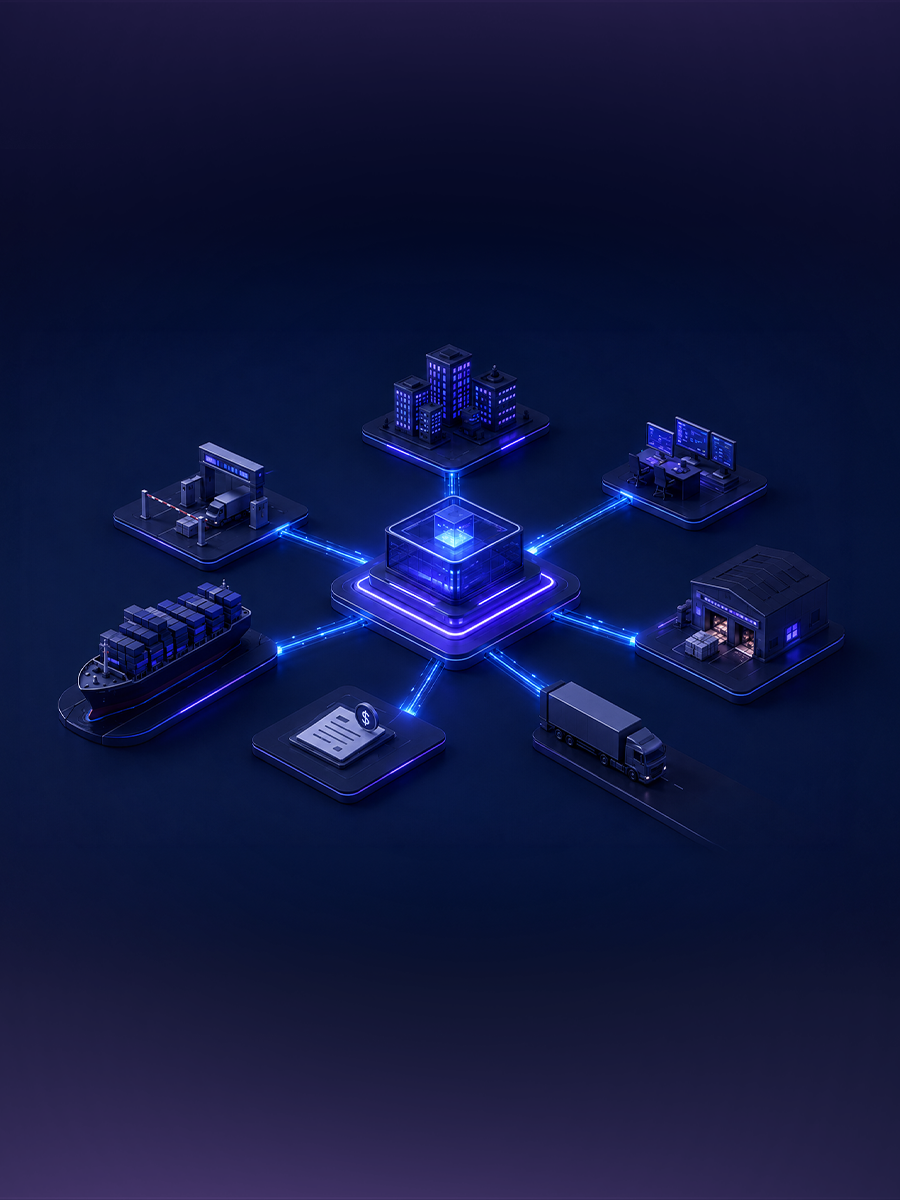
CargoWise became the common operating platform across 10 branches. Integrations strengthened the network around it. Workflow automation moved execution into a more governable environment. Training embedded the change across the workforce. Customer tools extended the same digital model outward. Continued support protected the environment once the implementation moved into live operation.
That combination is what separates a system deployment from an operating transformation.
The company was expanding its physical network.
SFL helped ensure the operating model did not fragment as the footprint grew with it.
Talk to SFL About Your CargoWise Implementation
SFL Tech works with logistics organisations that are moving from legacy platforms, adding new branches or countries, or redesigning an existing CargoWise environment for the next stage of growth.
Our implementation work starts with the operation: how freight moves, where finance connects, how branches need to be governed, which integrations are critical, where workflows should replace intervention, and what different teams need to adopt successfully. CargoWise configuration follows that operating logic — supported through integration, role-based enablement, go-live stabilisation and long-term optimisation.
For businesses making a platform decision ahead of growth, those early choices matter. The architecture established today becomes the environment every future branch, user and process inherits.
Book a consultation: https://sfltech.ai/book-a-call.html
About SFL Tech
SFL Tech is an All-Platinum CargoWise Service Partner supporting freight forwarders, customs businesses, logistics operators and 3PLs across CargoWise implementation, optimisation, integration and long-term operational support.
With 800+ projects, 250+ clients, 100+ specialists and experience across 50+ countries, SFL combines deep CargoWise capability with logistics-domain expertise across forwarding, finance, workflow, integrations, automation, change and support.
SFL works across the full CargoWise lifecycle — from assessing the existing operation and designing the future environment through implementation, integration, adoption and ongoing optimisation.
The objective is not simply to get CargoWise live.
It is to make sure the business is stronger because of how it has been implemented.





.png)

.png)
.png)