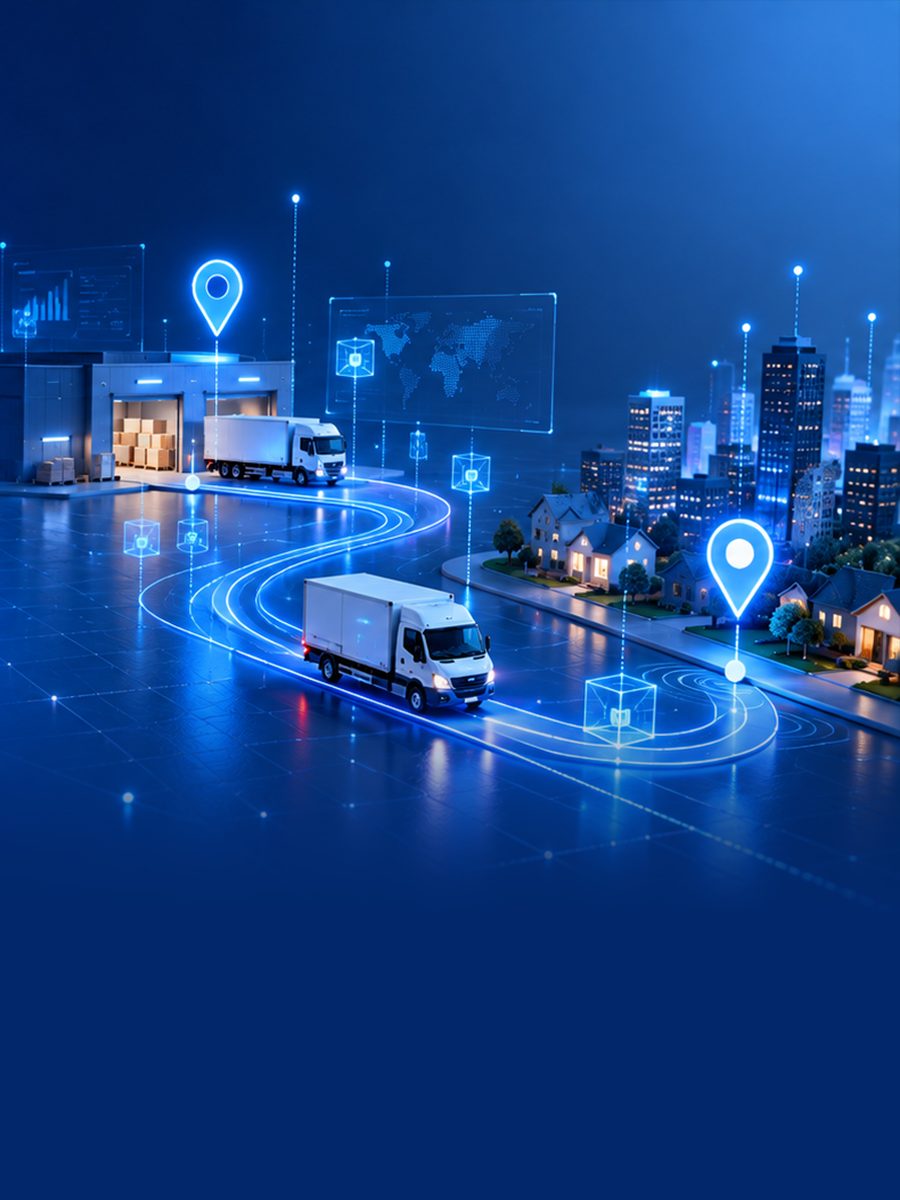


There is a reason the logistics industry has invested in OCR, RPA, offshore processing, and template automation for over a decade and still runs operations where people spend hours every day reading documents and typing information into systems. It is not a technology gap. It is not a training problem. It is an architecture problem — and until the industry treats it as one, no amount of automation will close it.
The gap between reducing data entry and eliminating it is not a matter of degree. It is a fundamentally different engineering outcome. And the technology required to achieve it has only recently matured to the point where elimination — actual, measurable, operational elimination — is a realistic proposition for freight businesses running modern platforms.
What a Decade of Automation Actually Achieved
The tools were never the problem. OCR reads documents with genuine accuracy — 97% to 99% on structured formats. RPA scripts move data between systems faster than any person can. Offshore teams process volume at a fraction of onshore cost.
What none of these tools changed was the role of the human in the information lifecycle.
Every one of them optimised a step within a process that still required a person to receive the document, decide what it was, route it to the right workflow, validate the extracted data, handle the exceptions, chase missing information, and confirm the final record. The human remained the orchestrator. The tools made individual steps faster. The process — the full journey from a document arriving in an inbox to a validated, compliant, billable record in the operating system — stayed fundamentally manual.
The economics are worth pausing on. A mid-size freight forwarder processing 200 shipments a day handles 1,400 to 2,000 documents daily across arrival notices, commercial invoices, bills of lading, packing lists, and compliance paperwork. At 8 to 12 minutes of handling per document — even with OCR assistance — that is 180 to 400 hours of human capacity consumed per day on information processing alone.
Automation reduced the per-document time. It did not reduce the number of humans required in the loop, because the loop itself — the decision-making, routing, validation, and exception-handling architecture — was never redesigned.
This is the distinction the industry conversation missed. Businesses bought speed. What they needed was architecture.
The Structural Problem Beneath the Efficiency Problem
Data entry persists for architectural reasons, and they operate on three layers.
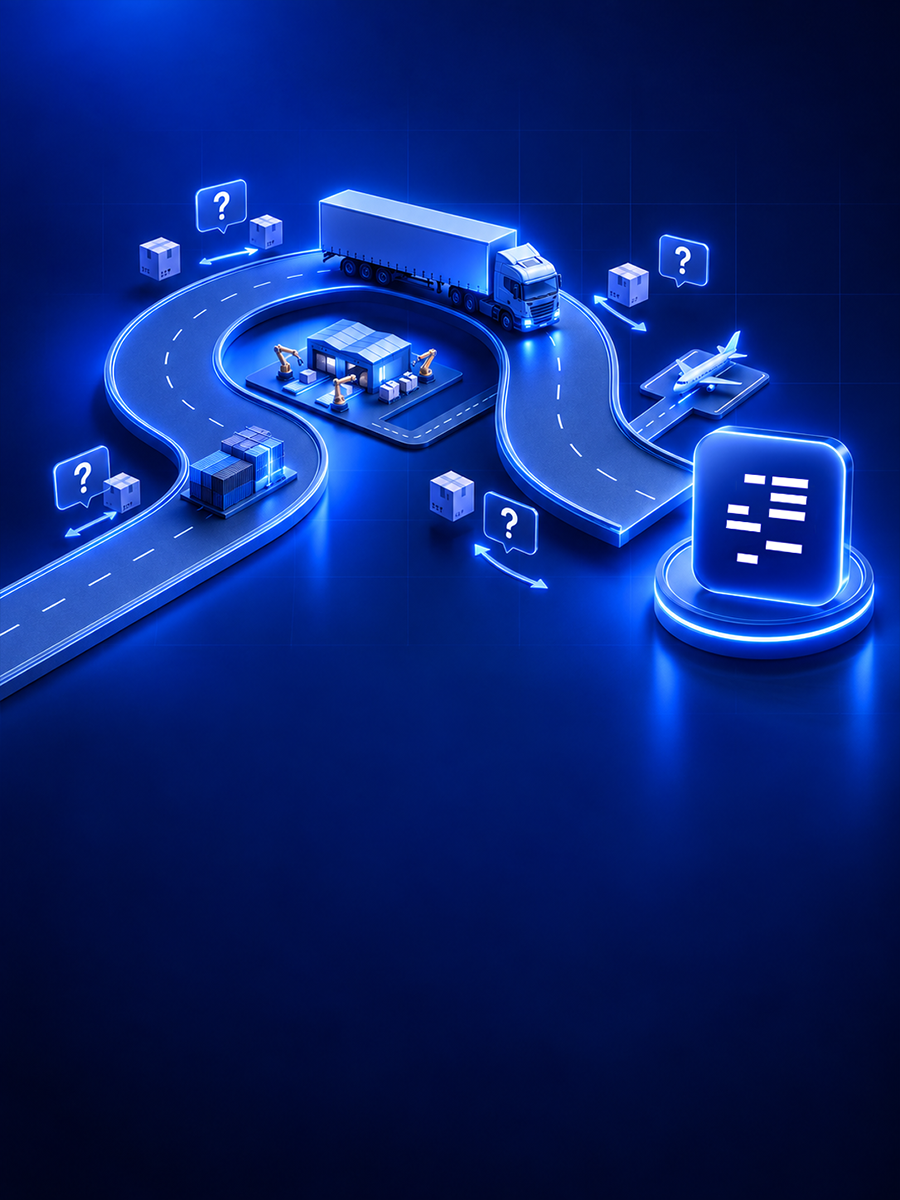
The information lifecycle is fragmented. Documents arrive from dozens of sources — carrier portals, customer emails, government platforms, agent communications — in dozens of formats. Each enters a different part of the operation and triggers a different handling pathway. The person reading the document is performing triage, classification, and routing simultaneously, because the system underneath has no unified logic for how information should flow from receipt to record.
Exception handling is human-dependent. A bill of lading with a missing consignee reference. A commercial invoice with quantities that don't match the packing list. A certificate of origin with a commodity description the system can't classify. These exceptions — representing 20% to 35% of inbound documents in a typical freight operation — drop out of whatever automation exists and land back on a person's desk. The automation handles clean data. The humans handle everything else.
The chase cycle is invisible. When information is missing or illegible, someone contacts the shipper, the importer, the carrier, or the agent. They ask for clarification. They wait. They validate the response. They re-enter the data. This cycle — the back-and-forth that happens before a document is even ready to process — consumes more operational hours than the data entry itself. And it is almost entirely unmeasured, because most systems track processing time from the point data enters the platform, not from the point the document first arrived.
These three dynamics — fragmented information flow, human-dependent exception handling, and invisible chase cycles — are why OCR and RPA hit a ceiling. They accelerated what happened inside the system. The architecture problem was everything that happened before and around it.
What Actually Changed
Two capabilities matured in the last 18 months that shifted this from an optimisation conversation to an elimination conversation.
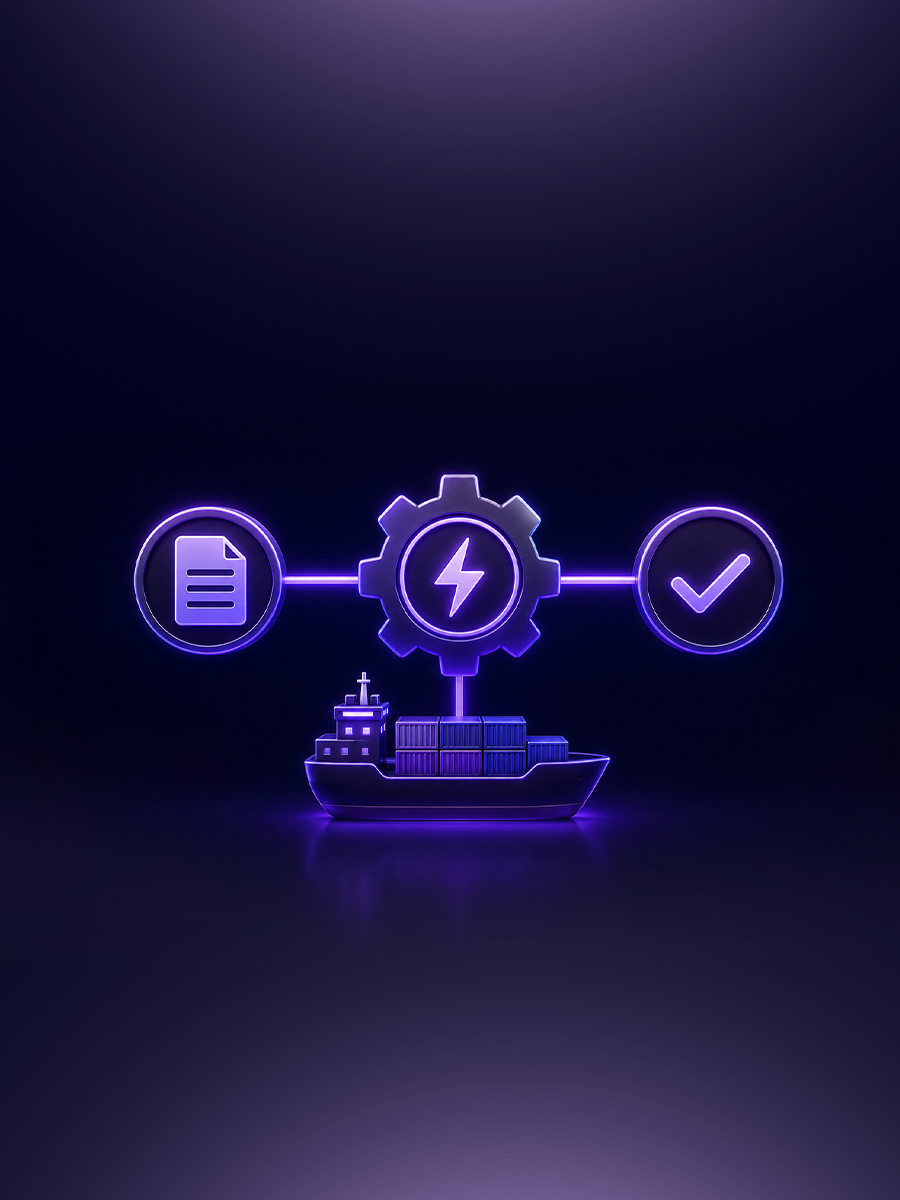
Agentic document processing. The meaningful leap was not better OCR. It was systems that don't just read a document but act on what they read — identifying what is missing, determining who to contact for the missing information, composing and sending the request, receiving and validating the response, and delivering a complete, verified dataset to the operating platform. The entire information-gathering loop — the one that currently sits with coordinators, operators, and documentation teams — handled autonomously, end to end.
This is not theoretical. Agentic AI systems are already operating inside major logistics platforms, running live on production freight for forwarders, customs brokers, and 3PLs. The technology exists. The question is no longer whether it works.
Autonomous job creation. Once the information lifecycle is handled — document read, exceptions resolved, missing data gathered — the next step triggers automatically: job registration within the operating system, with classification and compliance checks already initiated before a human opens the record. The operator's first interaction with the shipment is reviewing a structured, validated, compliance-checked job. Not building one from raw documents.
What this means operationally: the first human touchpoint moves from "read the email and start entering data" to "review the completed record and approve it." That is not a productivity improvement. That is a different operating model.
What Disappears When Data Entry Actually Ends
The immediate gain — labour hours recovered — is obvious and significant. Businesses achieving genuine elimination are recovering the equivalent of 2 to 4 full-time roles per 100 daily shipments processed.
The second-order effects are where the operating model actually changes:
- The error layer collapses. Manual data entry in customs and freight carries a 15% to 30% error rate depending on commodity complexity and the regulatory environment. Each error costs between $50 and $500 to resolve through reclassification, amended declarations, carrier disputes, and delayed deliveries. When the data entry disappears, the error layer that sat on top of it disappears with it. That is $140,000 to $280,000 in annual error-related costs for a mid-size forwarder — eliminated, not reduced.
- Compliance moves from reactive to embedded. When an AI system reads a document, classifies the commodity, screens against restricted parties and controlled goods, and flags issues before the declaration is submitted — all within the same automated information flow — compliance becomes a property of the process rather than a checkpoint applied after it. The audit trail generates automatically. The risk assessment happens before the human sees the record, not after they submit it.
- Scalability decouples from headcount. This is the one that changes the commercial model. A freight business processing 200 shipments a day with 30 documentation staff cannot process 400 shipments a day with the same team. A freight business where the documentation lifecycle runs autonomously can. Volume becomes a technology scaling question, not a recruitment question.
- Training economics invert. The single largest hidden cost in logistics operations is the 6 to 18 months required to train a new team member to handle documentation accurately across multiple trade lanes, regulatory environments, and commodity types. When the system handles the information lifecycle and the human role shifts to review and exception management, the training curve compresses from months to weeks. New team members reach productivity in a fraction of the time.
The Architecture Question Every Freight Business Now Faces
Data entry elimination is available today. The technology is mature, live, and operating at scale inside platforms the industry already runs on.
The question is not whether to pursue it. The question is whether the operating environment — the data structures, workflow logic, integration architecture, and process design underneath the platform — is built to support what elimination actually requires.
Elimination is not a feature you activate. It is an outcome of environmental depth: clean master data, structured workflows, integrated information sources, and compliance logic embedded in the process design rather than bolted on after the fact. Businesses that have that depth will see elimination happen almost naturally as they activate the capabilities already included in their platform. Businesses that don't will activate the same capabilities and see a faster version of the same broken process — which, as the industry learned with OCR a decade ago, is not the same thing at all.
The technology has moved past the point where data entry is a defensible part of logistics operations. The only question left is whether the foundation is ready to support what comes after it.
.png)
.png)

.png)

.png)






.png)
.png)







.png)
.png)

.png)



.png)








.png)



.png)













.png)












.png)






.png)
.png)