
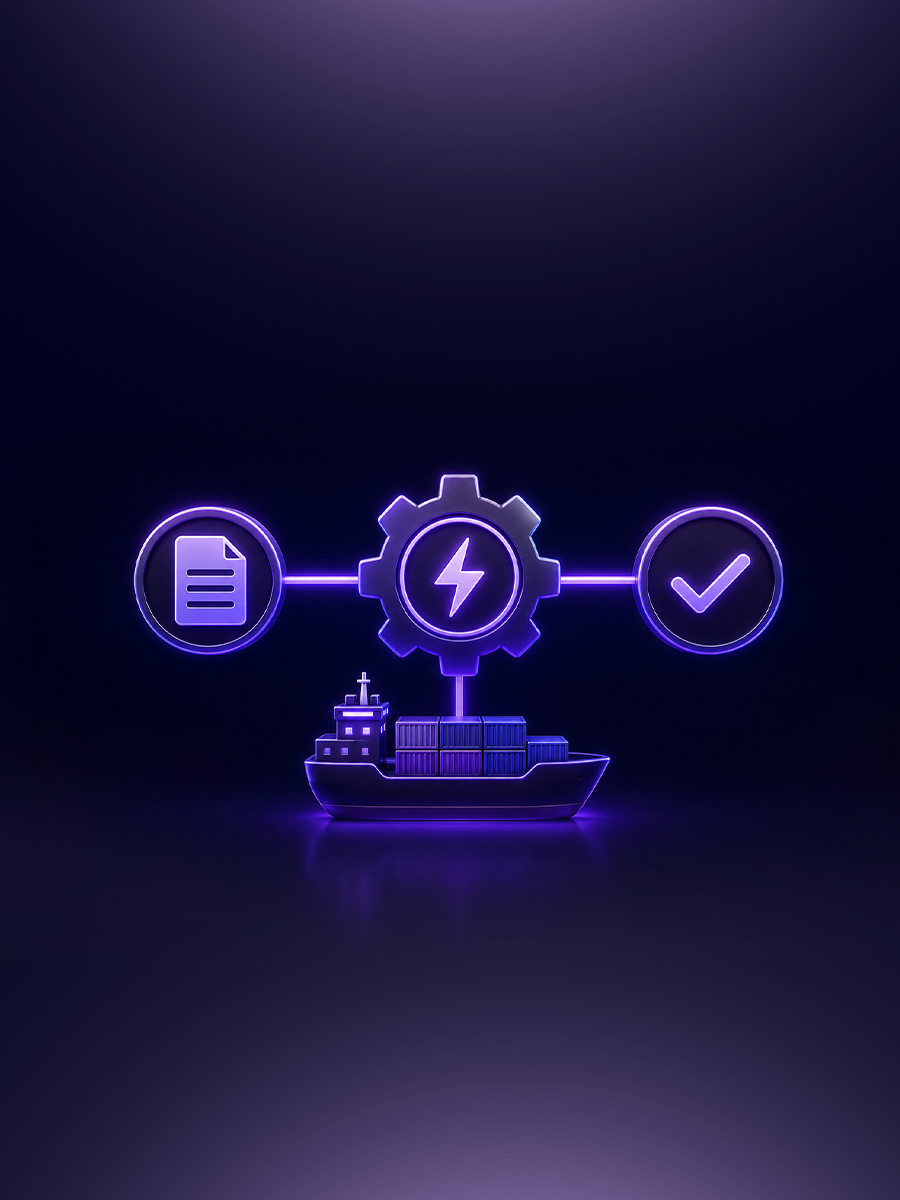
An average international shipment generates seven to ten documents. Bills of lading, commercial invoices, packing lists, arrival notices, customs declarations, certificates of origin, carrier bookings. For a mid-size forwarding operation processing several hundred shipments a month, that translates into thousands of documents flowing through the operations team, each one requiring extraction, validation, entry, and filing.
Industry benchmarks put the processing time at eight to twelve minutes per bill of lading, fifteen to twenty minutes per commercial invoice with multiple line items, three to five for a simple arrival notice. The operational hours compound fast. So do the error costs: a 2025 analysis of mid-size freight forwarders found that document errors alone account for between $140,000 and $280,000 annually, driven by customs holds, carrier amendment fees, and the downstream corrections that ripple through billing, compliance, and customer relationships.
Going paperless addressed the storage problem. It moved documents from filing cabinets to servers, from couriers to email attachments, from physical archives to digital records. What it did not address is the processing burden: the operational hours consumed by reading, entering, validating, and correcting the data inside those documents. That is where the productivity conversation has moved, and the distance between businesses that have made that shift and those still operating at the paperless baseline is growing.
Why This Stopped Being Optional
For years, digital documentation was framed as an efficiency decision. Forward thinking businesses adopted it early. Others waited. The competitive advantage was real, but the timeline was theirs to choose.
That has changed. The regulatory environment has moved decisively toward mandatory digital documentation, and the timelines are no longer flexible.
The EU's eFTI regulation reaches full application in July 2027, requiring member state authorities to accept freight transport information shared electronically via certified platforms. The implementing acts are already in force, and certified platforms can begin operations from this year. The European Commission estimates the shift will save EU transport operators approximately €1 billion annually in reduced administrative burden alone.
In air cargo, IATA's ONE Record became the preferred data sharing standard from January 2026. Brazil eliminated the physical air waybill entirely in April 2025, the first country in the Americas to do so. In ocean, electronic bill of lading adoption has grown from barely 1% of global volume in 2021 to approximately 11% today, accelerated by legislation in the UK, India, Singapore, and the UAE that removed the legal barriers holding digital trade documents below meaningful adoption for decades. FIATA has launched its electronic Multimodal Bill of Lading, backed by a new Digital Identity framework and insurance infrastructure built for global interoperability.
The pattern across every mode is the same: digital documentation is moving from competitive advantage to compliance requirement. The infrastructure to meet these mandates is already inside the operating platform. The question is whether the environment around it is configured to use it.
What the Platform Already Automates
The AI capability now embedded in CargoWise goes well beyond digitising paper. It automates the entire document lifecycle, from receipt through extraction, validation, classification, and action.
AI assisted document ingestion applies computer vision and natural language processing to arrival notices, commercial invoices, bills of lading, and packing lists. Data is extracted, validated against master data, and structured into the job record automatically, with early indicators showing 40 to 60% reductions in manual entry for high volume document types and AI extraction achieving 97 to 99% accuracy on standard documents when confidence score routing is in place.
SARA (Smart Auto Request Agent) takes this further. An agentic AI that reads incoming emails and documents, identifies what is missing or illegible, contacts the importer or exporter directly for clarification, and delivers completed information back to the operator. The back and forth that absorbs hours of operational time across every working day, handled autonomously, without the operator initiating or chasing a single email.
Once SARA completes the information cycle, Auto Job Creation triggers registration within CargoWise automatically, with classification and compliance checks already initiated before the operator opens the record. The AI Classification Assistant recommends HS codes drawn from commodity descriptions and the platform's global shipment history. ComplianceWise runs restricted party screening and controlled goods checks inside the submission workflow, trained on control lists and sanctioned entity databases, with a full audit trail behind every decision.
The technology exists, inside the platform, to take a document from receipt to processed job record with minimal manual intervention. The question is whether the environment receiving it is configured at the depth that lets the automation perform.
Where the Gain Gets Lost
Document automation performs at the level of the data and workflow beneath it.
An ingestion engine reading a bill of lading and populating a job record is extraordinary technology. It is also working against the master data it feeds into. If commodity classifications have been entered inconsistently across branches and operators for years, the AI Classification Assistant learns that inconsistency. If charge codes differ between Sydney and Rotterdam and Houston, the billing data downstream reflects that fragmentation regardless of how accurately the document was read.
The same dynamic applies to workflow. SARA can gather missing information autonomously and trigger auto job creation, but if the workflow was never configured to assign tasks in sequence, escalate exceptions through structured logic, or fire milestones at the right stage of the shipment lifecycle, the automation produces speed on a shallow foundation. The operator still intervenes. The exception still gets handled manually. The productivity gain the technology was designed to deliver gets absorbed by the gaps in the foundation beneath it.
And the adoption dimension matters as much as the technical one. Every AI tool inside CargoWise operates on system data. When the team works outside the platform, through parallel spreadsheets, offline tracking, and manual workarounds that bypass the system, the document automation has blind spots it cannot close. The information it needs sits in someone's inbox or someone's local file, outside the platform's reach.
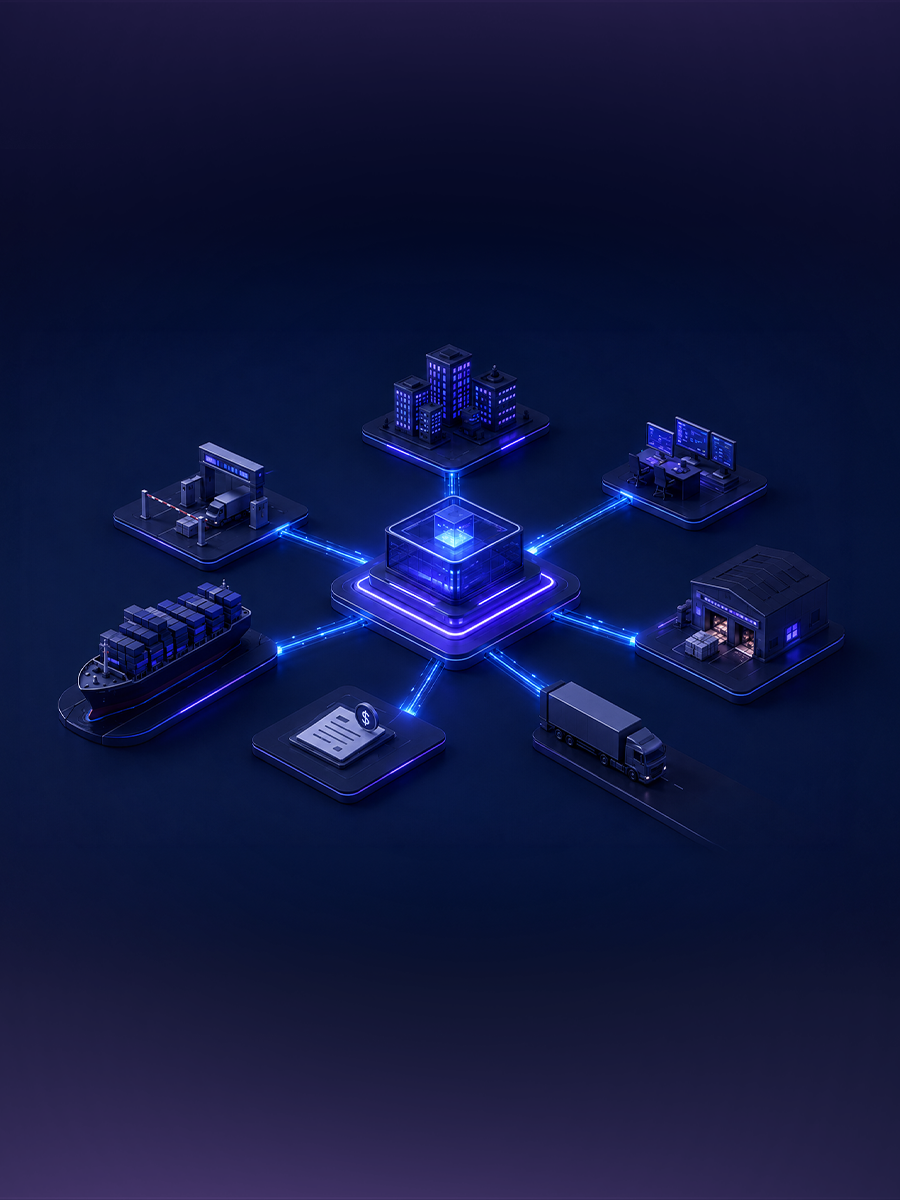
This is the pattern running beneath the productivity conversation in logistics: the technology is sophisticated, mature, and included inside the operating platform. The environments receiving it, in many cases, were configured for a different era of the platform's capability. The businesses extracting the strongest returns are the ones whose workflow architecture, master data governance, and integration layer were built at the depth the automation requires.
Where SFL Tech Sits in This
SFL Tech has been inside CargoWise environments long enough, across 895+ implementations, 250+ clients, and 50+ countries, to understand precisely where document productivity gaps form and how they compound across the operation.
The approach is consistent: assess the current environment across its data integrity, workflow depth, and automation readiness. Map where the distance between what the platform makes available and what the operation extracts is widest. Close those gaps in a sequence governed by commercial return, highest impact first, with KPI baselines set before the work begins and measured against real operational data after.
SFL Tech holds All-Platinum accreditation, the highest tier across all seven CargoWise competency areas, and has maintained it continuously since 2017. That depth shows in the delivery: 85% reduction in manual data entry, 15% decrease in cost per shipment, 20% improvement in processing time, and CargoWise utilisation rates exceeding 80% across the client base. SFL Tech also develops proprietary tools, DIVA for data integrity validation and CargoDoc for document automation, built from the operational patterns identified across that breadth of implementation work.
The document automation is already inside CargoWise. The regulatory environment is accelerating toward mandatory digital documentation across air, ocean, and road. The productivity gains are real, measurable, and available now. What determines whether your operation captures them is the depth of the environment they land in.







.png)

.png)
.png)