

An industry that operates across every border on the planet needs people who understand what is on the other side of them.
The Meeting That Changes the Outcome
Picture this. A project team is scoping a CargoWise implementation for a freight forwarder with offices across Southern Africa, the Middle East, and Southeast Asia. The team is working through the customs module configuration. Someone suggests a workflow based on how European customs declarations typically flow. Clean, logical, well-structured.
Then someone else in the room, someone who spent eight years running customs operations in Durban, says: "That will not work in South Africa. The SARS interface behaves differently. The bond management rules are different. And the way clearing agents interact with the system on the ground does not follow that sequence."
The workflow gets redesigned. Not from theory. From knowledge that only exists inside someone who has lived inside that operating environment.
Now imagine that person was not in the room. The workflow ships as designed. It looks right on paper. It passes testing because the test scenarios were written by the same team that built the design. It goes live. And within two weeks, the Durban office is drowning in workarounds, the clearing team is frustrated, and the client is asking why the implementation does not reflect how their business actually operates.
That meeting, that single moment where lived experience intercepts a well-intentioned assumption, is the difference between an implementation that works and one that creates months of remediation. It happens constantly in global logistics. And it only happens when the right people are in the room.
Why Logistics Is Different
Every industry benefits from diversity. Logistics depends on it in a way that most industries do not, because the work itself crosses cultural, regulatory, and operational boundaries on every single engagement.
A shipment does not care about org charts. It moves through Vietnamese export regulations, Singaporean transshipment protocols, Dutch import customs, and German road transport restrictions in a single journey. Every one of those touchpoints is governed by local rules, local practices, local expectations, and local relationships that are invisible to someone who has never operated there.
A global accounting firm can standardise its audit methodology worldwide because IFRS is IFRS. A global law firm can specialise by practice area because contract law follows recognisable structures across jurisdictions. Logistics cannot standardise the same way because the physical reality of moving goods, clearing customs, managing carriers, and serving clients is genuinely different in every market. The tariff codes are different. The carrier landscape is different. The documentation standards are different. The way business relationships are built, maintained, and repaired is different.
This is not a marginal consideration. It is the core operational challenge of running a logistics business across borders. And the companies that staff their teams with people who carry that local knowledge as lived experience rather than learned theory operate with an advantage that no process document, no training programme, and no technology platform can replicate.
Beyond Geography: The Depth That Comes from Different Paths
The most interesting teams in logistics are not just geographically diverse. They are experientially diverse.
Consider what happens when a project team includes someone who started their career as a customs broker in West Africa, someone who spent fifteen years in European ocean freight operations, someone who came into logistics from a software engineering background with no supply chain history at all, and someone fresh from university who has never seen a bill of lading but understands data architecture intuitively.
The customs broker catches regulatory assumptions that everyone else missed. The ocean freight veteran knows from experience that the carrier workflow being designed will break during peak season because they have seen it break before, on a different continent, for the same structural reason. The software engineer questions why the data model is designed around a process limitation rather than around the actual information flow. And the graduate asks a question so basic that it forces the entire team to re-examine an assumption they had stopped questioning years ago.
That combination produces solutions that no homogeneous team, however talented, would reach. Not because homogeneous teams are less capable. Because they share the same blind spots. They validate each other's assumptions. They converge on answers that feel right because everyone in the room has the same frame of reference.
Diverse teams argue more. They take longer to reach consensus. And the consensus they reach is better, because it has survived challenge from perspectives that a uniform team would never have surfaced.
In logistics, where the problems are global, the regulations are local, the technology is complex, and the margin for error on a live implementation is slim, "better" is not a soft aspiration. It is the difference between a solution that works in production and one that looks good in the presentation.
The Client Relationship Layer
There is a dimension of diversity in logistics that rarely appears in the research but shows up in every client meeting that crosses a cultural boundary.
A client in Japan communicates dissatisfaction differently than a client in South Africa. Both may be unhappy with the same issue. One will express it through careful, indirect language that requires attentive reading. The other will tell the room exactly what the problem is, directly, and expect an equally direct response. A team that reads both of these signals accurately responds appropriately and preserves the relationship. A team that applies one cultural lens to both situations will misread one of them, and the misread will cost trust that takes months to rebuild.
The same dynamic plays out in how decisions are made, how urgency is communicated, how commercial negotiations unfold, and how partnerships are maintained over time. A handshake in one culture closes the deal. In another, it opens the next round of discussion. A deadline stated in one context is absolute. In another, it is a starting position. An email that feels appropriately direct in New York feels abrasive in Kuala Lumpur. A response time that feels efficient in London feels rushed in Riyadh.
None of this is captured in a process manual. It lives in people. In the cultural fluency that comes from having operated inside these environments, not read about them. Logistics companies with genuinely diverse teams navigate these dynamics instinctively because someone in the room has the context. Companies without that diversity navigate them clumsily, and the clumsiness shows up in client relationships that never quite reach their potential.
The Generational Compound
There is one more dimension worth naming, because it is playing out in real time across the industry.
Logistics is in the middle of a generational handover. Experienced professionals who built their careers in an era of telex machines, physical document pouches, and relationships maintained through face-to-face meetings are working alongside a generation that has never known logistics without real-time tracking, automated workflows, and AI-powered document capture.
The tension between these two perspectives is sometimes uncomfortable. It is also enormously productive when it is managed well.
The veteran who has seen three market cycles knows that the pattern repeating itself right now has happened before, and knows what worked and what did not. The graduate who grew up with technology instinctively sees automation opportunities that the veteran has learned to work around rather than eliminate. The veteran's pattern recognition protects the operation from repeating old mistakes. The graduate's digital fluency pushes the operation toward new capabilities.
When both perspectives are valued, when the organisation creates space for the veteran to challenge the graduate's assumptions and the graduate to challenge the veteran's habits, the result is an operation that is simultaneously grounded in experience and open to transformation. When one perspective dominates, the operation either stagnates or moves fast without the wisdom to avoid the mistakes that speed creates.
The logistics companies managing this generational dynamic most effectively are the ones where mentorship flows in both directions. Where the 25-year veteran learns from the graduate's data fluency. Where the graduate learns from the veteran's operational judgement. Where neither is treated as more valuable than the other, because neither is.
What It Takes to Get This Right
Hiring diverse people is the beginning of the work, not the end of it.
The value of diversity materialises only when the person who knows the South African customs environment is in the room when the South African implementation is being scoped. When the person who understands Middle Eastern commercial dynamics is shaping the client engagement strategy for that region, not reviewing it after it has been written by someone else. When the junior team member from a non-traditional background is encouraged to challenge the assumption that the senior team has stopped questioning.
This requires deliberate team composition, not default staffing. It requires knowledge-sharing structures that move insight across geographies systematically rather than accidentally. It requires career pathways that do not inadvertently filter out the perspectives the organisation needs most. And it requires leaders who understand the difference between an organisation that employs people from 20 countries and one that genuinely thinks, solves, and delivers like a company from 20 countries.
The difference between those two things is the difference between a headcount statistic and a competitive advantage.
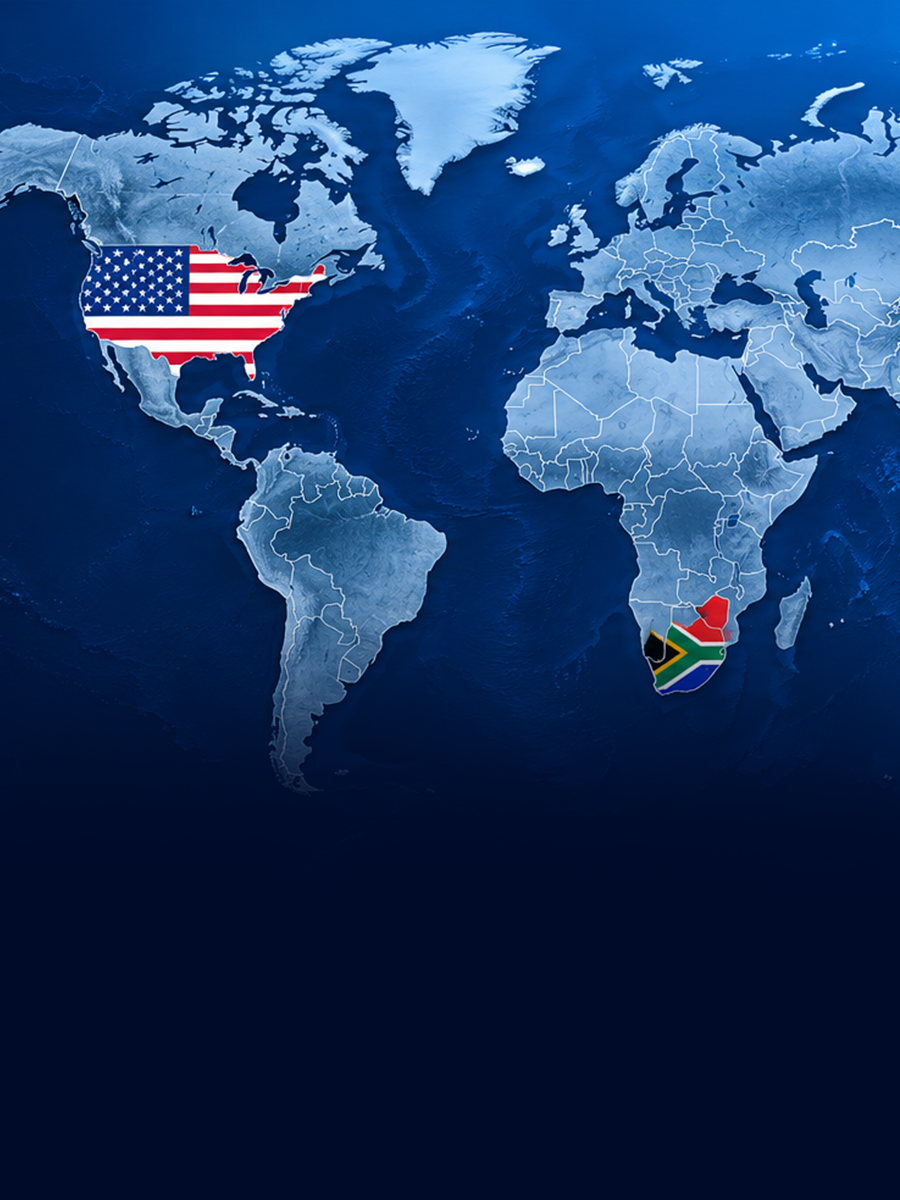
SFL Tech operates across 42+ countries. The team spans continents, languages, industries, and generations. That breadth is not an HR metric. It is the reason a client in Miami, a client in Johannesburg, a client in Dubai, and a client in Ho Chi Minh City each receive a solution built by people who understand their market from the inside, not from a manual. It is the reason knowledge from an implementation in one region can transfer directly to a challenge in another, because someone in the organisation has lived in both worlds. And it is the reason the work holds up in production, in markets where the distance between a good assumption and the local reality can be the difference between a successful go-live and a six-month remediation.
Global logistics needs global people. That has always been true. What has changed is that the work has become too complex, the clients too sophisticated, and the stakes too high to deliver at the highest level without it.
.png)


.png)

.png)





.png)
.png)



.png)




.png)























.png)












.png)











.png)





.png)