


Every freight business has a version of the same story. Someone notices that the shipment data in the TMS doesn't match the invoice in the finance system. Or that the customs filing was built from a manually rekeyed bill of lading instead of the booking record already sitting in the forwarding platform. Or that three people in three departments entered the same consignee details into three separate systems on the same morning, and none of the entries agree.
The instinct is to call this a training problem, or a process problem, or a "we need better automation" problem. It's none of those. It's an architecture problem. And until the architecture changes, the duplication doesn't stop. It just gets faster.
The Real Cost Isn't the Rekeying
Manual data entry in freight forwarding still costs roughly $15 to $40 per document when you account for the handling, the checking, and the corrections. Automation can compress that to around $3. Those numbers are real, but they obscure the larger issue. The cost of entering a piece of data twice isn't the labour. It's the divergence.
The moment the same shipment exists as two slightly different records in two systems, every downstream process inherits the inconsistency. Finance reconciles against one version. Operations tracks against another. Compliance files against whichever version the broker had open. The error rate on manual entry runs between 1% and 4% per hundred entries, which sounds manageable until you apply it to a mid-market forwarder processing several thousand shipments a month across ocean, air, and customs. At that volume, you're not dealing with occasional mistakes. You're dealing with a structural integrity problem that compounds across every touch point in the operation.
This is why data duplication conversations that start and end with "let's automate the entry" miss the point. Automating the entry of data into a fragmented architecture just moves the inconsistency downstream faster. The question that actually matters is: why does the same data need to be entered more than once in the first place?
How Freight Tech Stacks Accumulate Instead of Being Architected
Most logistics technology environments weren't designed. They accumulated. A forwarding platform here. A finance system there. A customs tool bolted on when the business started handling its own brokerage. A carrier portal that requires its own login and its own data. A warehouse management system that was selected by a different team in a different year with different priorities.
Each system came with its own database, its own data model, its own field definitions. "Consignee" in one system means the legal entity receiving the goods. In another, it means the delivery address. In a third, it maps to a customer reference that was never properly normalised. These aren't edge cases. This is the default state of most freight businesses that have been operating for more than a decade.
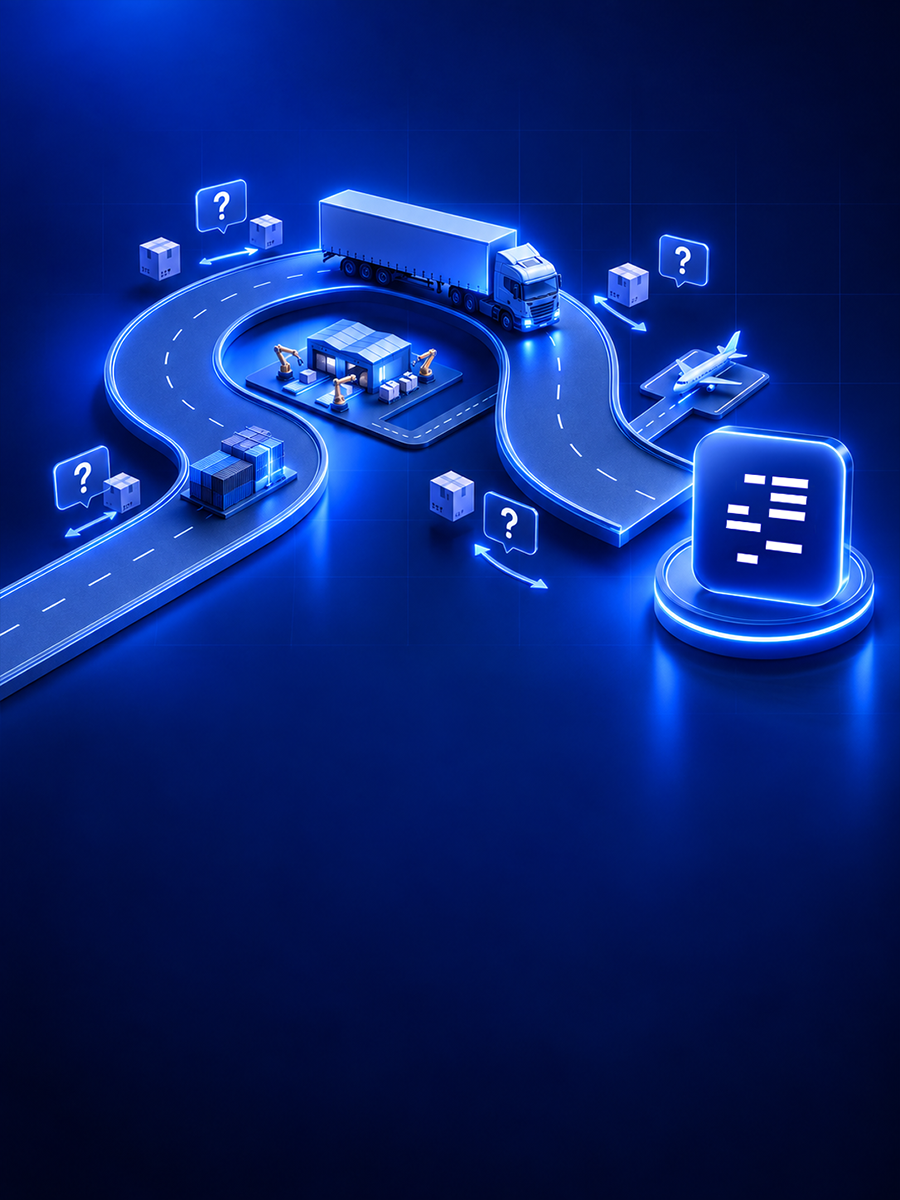
The connections between these systems were built reactively. When two systems needed to share data, someone built a bridge. An EDI connection here. A flat-file export there. A middleware layer that was configured by a contractor who left the business four years ago and whose documentation, if it existed, lives in a folder no one has opened since.
This is how you end up paying twice for the same data. Not because anyone chose to, but because the architecture was never unified. Each system holds its own version of reality, and the integrations between them are translations, not synchronisations. Every translation introduces latency, potential error, and a maintenance burden that grows with every new connection.
Integration Isn't a Feature. It's a Design Decision.
Integration in logistics carries a specific technical vocabulary, and understanding it matters because each method exists for a reason, serves a different purpose, and carries different operational consequences.
EDI (Electronic Data Interchange) remains the backbone of carrier and customs authority communication. Structured, standardised across X12 and EDIFACT formats, and built for reliability over speed. In regulated environments where message formats are prescribed by government authorities, that reliability is non-negotiable. EDI handles the heavy, repetitive, compliance-critical messaging that keeps cargo moving through ports and borders. Where it creates problems is when it's used for everything, including internal system connections where a real-time API would be more appropriate.
API integration is where the architectural decisions have the most operational impact. A well-designed API connection between a forwarding platform and an ERP creates a genuine data bridge: structured payloads, validated fields, real-time or near-real-time synchronisation with proper error handling and retry logic. When it's done well, it eliminates entire categories of manual reconciliation. When it's done poorly, a badly scoped API that pushes partial records or lacks proper exception handling, it's worse than no integration at all. Operations believes the systems are talking to each other. They are. They're just having different conversations.
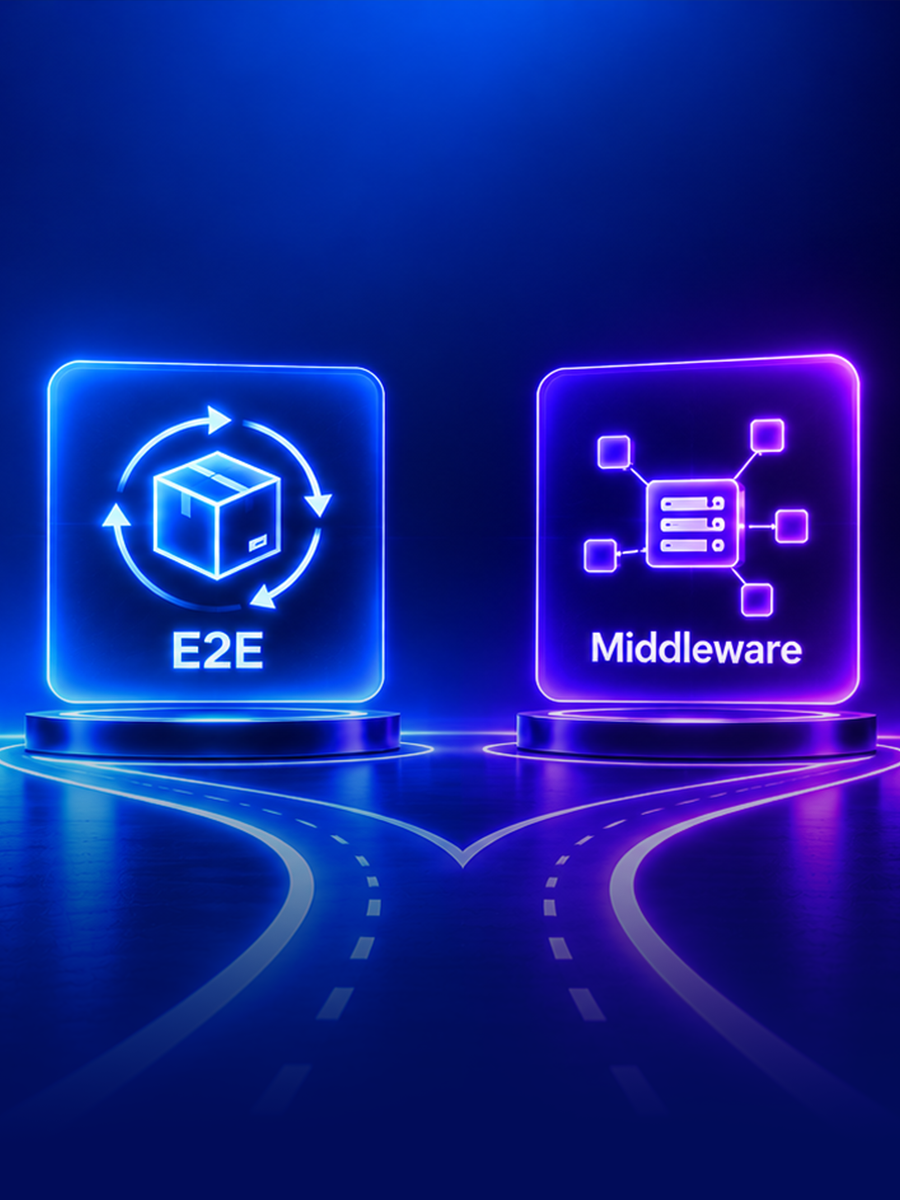
E2E (Enterprise-to-Enterprise) messaging is a different proposition entirely. When both parties in a supply chain transaction operate on the same platform, E2E removes the transformation layer altogether. No format conversion. No middleware interpretation. No mapping ambiguity. Both sides speak the same data language, and the message carries a built-in audit trail from origin to destination. It activates without custom development. The limitation is architectural: it only works when both parties share the same platform.
The integration gateway, whether that's eAdaptor, eAdaptor Next, or an equivalent middleware layer, handles the external boundary. Everything that isn't carrier EDI or same-platform E2E flows through this layer. It's where data enters and leaves the core environment, and it's where most of the architectural debt lives. Legacy gateways were often constrained to a single outbound endpoint, which forced businesses to build proxy layers and middleware stacks just to route data to multiple destinations. Modern gateway architectures support multiple channels natively, with stronger authentication (OAuth 2.0, certificate-based credentials), better format flexibility, and proper message traceability. But migrating to them means confronting every integration decision that was made, or deferred, over the past decade. Every connection has to be inventoried, documented, and individually configured. That's not a technical upgrade. It's an architectural reckoning.
The hierarchy matters. The default order of preference for any integration decision should be: native platform connectivity first, standardised messaging second, custom integration only when the pre-built paths can't meet the requirement. Every custom connection is a maintenance obligation. Every maintenance obligation is a cost that compounds over time.
Single Database vs. Best-of-Breed: The Architecture That Determines Duplication
This is where the conversation becomes structural.
In a best-of-breed environment, integration is a translation exercise. Data leaves one system in one format, gets transformed by middleware, and arrives in another system in another format. Every transformation is a potential point of failure. Every connection is a maintenance obligation. And every new requirement, a new carrier, a new customs format, a new reporting dimension, adds another spoke to an increasingly fragile wheel. The data doesn't live anywhere definitively. It lives everywhere, approximately.
In a single-database architecture, the forwarding, customs, finance, warehouse, transport, and CRM functions all operate within one data environment. The same shipment record doesn't need to be entered, translated, or reconciled across systems. It exists once. Every module reads from it. Every workflow writes back to it. Integration shifts from internal translation to external communication. The complexity moves to the boundary: how does the platform talk to systems outside its own environment? That's where EDI, API, E2E, and the integration gateway do their work. But inside the environment, there's nothing to integrate. The data is already unified.
The difference isn't theoretical. It's the difference between an operation where finance, operations, and compliance are working from the same record, and one where they're each working from their own version of something that was probably the same record at some point.
Why Integration Architecture Is Now an AI Prerequisite
This is the part that most businesses haven't connected yet.
Every AI capability that the logistics industry is investing in, document ingestion, predictive analytics, automated classification, workflow automation, requires clean, consistent, deduplicated data as a baseline. A machine learning model trained on data that contains two slightly different versions of the same shipment doesn't produce twice the insight. It produces unreliable output. An AI workflow engine routing decisions based on records that were manually rekeyed with a 1% to 4% error rate isn't augmenting decision-making. It's automating inconsistency.
The numbers tell the story. Seventy-seven percent of logistics IT vendors now offer AI solutions, up twenty-seven points in two years. But data management climbed nine points year-over-year as the most pressing concern among logistics technology buyers. Security jumped fifteen points to 35%, driven directly by the complexity of managing credentials and certificates across integrated systems. The industry is adopting AI tools at pace while the data infrastructure underneath remains fragmented.
This isn't a timing problem that resolves itself. It's a sequencing problem. Integration architecture comes first. AI capability comes second. Businesses that reverse the order end up with sophisticated tools producing unreliable results, and no clear path to fixing the underlying cause without unwinding the AI implementation they just paid for.
What Clean Integration Actually Requires
The businesses that will operate most efficiently in this environment are not the ones with the most integrations. They're the ones with the cleanest. That means:
- Every connection documented. Not in someone's memory. In a structured solution document that maps current state, future state, configuration, and test cases.
- Every data flow mapped. Which system is the source of truth for which data element. Where transformations happen. What happens when a message fails.
- Every authentication credential governed. Certificates expire. OAuth tokens need rotation. If no one owns the renewal process, the integration fails silently at the worst possible moment.
- Every redundant pathway retired. Legacy connections that were replaced but never decommissioned are not harmless. They're attack surfaces, maintenance overhead, and sources of data that shouldn't exist.
This requires an architectural view, not a tactical one. It requires understanding that the answer to data duplication has never been faster entry. It's fewer entries. And fewer entries only come from an environment where data lives in one place and moves through governed channels to the systems that need it.
The integration isn't the afterthought. It's the architecture.
.png)
.png)

.png)

.png)






.png)
.png)







.png)
.png)
.png)



.png)









.png)



.png)












.png)












.png)




.png)
.png)