

It is the shortest leg, the least visible, and the most manually coordinated segment in international logistics. It is also where the most expensive failures begin.
A Familiar Monday
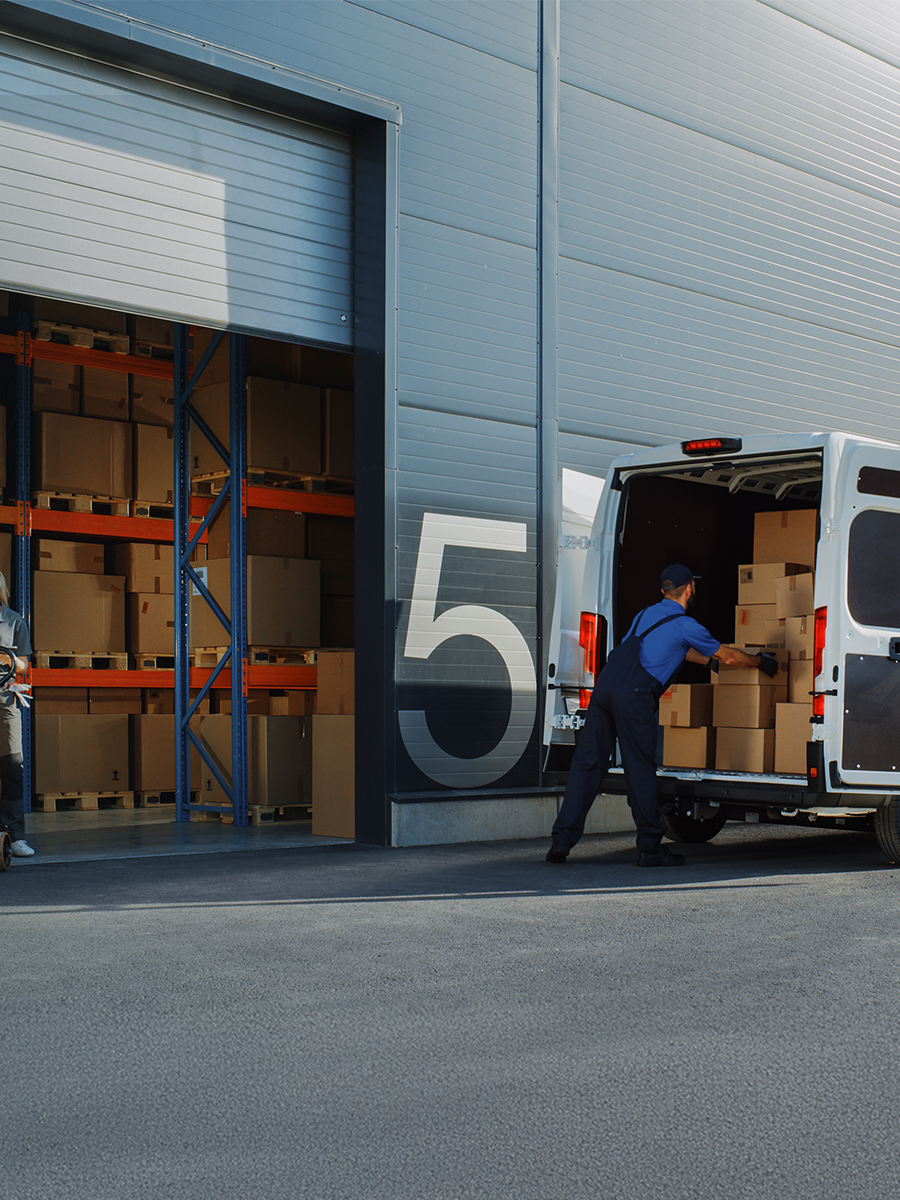
Cargo was supposed to be ready on Tuesday. The origin carrier arrived at the shipper's facility. The goods were not staged. Nobody had informed the freight forwarder. By Wednesday afternoon, the consolidation window had closed. The vessel booking was rolled. Four days were added to the transit before the shipment had even left the country of origin.
Demurrage exposure. Rebooking cost. Amended documentation. A revised plan communicated to a client who had already promised an arrival date to their own customer.
Total cost of that single first-mile failure: somewhere between $2,000 and $15,000, depending on the commodity, the trade lane, and how far the downstream plan unravelled before anyone caught it.
Now consider how many times some version of this happens in a given month across a freight forwarding operation managing thousands of shipments. Not always this dramatically. Sometimes it is just a half-day delay. A missing document. A cargo weight that does not match the booking. Small failures, individually. Cumulatively, one of the largest untracked cost categories in the business.
Why the First Mile Gets Neglected
The honest answer is that freight forwarders have historically invested their attention and technology where they have the most control: the middle mile. Carrier management. Customs clearance. Transit visibility. Financial operations. These are the segments where the platform works hardest, where the team has the deepest expertise, and where the data flows most reliably.
The first mile sits at the edge. Before the freight forwarder's systems take over. Before the data is clean. Before anyone has confirmed that what was booked is what actually exists on the factory floor.
This segment is typically coordinated through a patchwork of emails, phone calls, WhatsApp messages, and PDF attachments exchanged between the shipper, the origin carrier, and the freight forwarder's origin office. Pickup confirmations are verbal. Cargo readiness is assumed rather than verified. Documentation completeness is discovered at the consolidation point, not at the point of origin.
The result is a persistent information gap at the very start of the supply chain. And that gap has consequences that cascade through every subsequent segment.
The Cascade
First-mile failures do not stay in the first mile. They amplify.
A missed pickup pushes consolidation back. Consolidation delay misses the vessel cut-off. A later vessel means a later arrival. A later arrival compresses the destination plan. The last-mile carrier had already slotted the delivery based on the original ETA. The warehouse had allocated a receiving window. The client had committed a date to their customer.
Every participant in the chain performed their function. The supply chain still failed. And the failure originated in a segment that most of the participants had no visibility into.
The freight forwarder sits at the centre of this cascade. They are the one the client calls. They are the one who has to explain why the goods are late. And in most cases, they are the one who found out about the first-mile failure after it had already triggered the downstream disruption, because the data did not reach their system in time to act on it.
What Goes Wrong, Specifically
Five failure patterns account for the vast majority of first-mile disruption in international freight forwarding. They are remarkably consistent across geographies, commodity types, and trade lanes.
Cargo readiness gaps. The booking says the goods will be ready on the 15th. The origin carrier arrives on the 15th. The goods are partially staged, or not staged at all, or staged but with different quantities than what was declared. The pickup does not happen. Nobody updated the forwarder. The booking sits in the system showing "awaiting collection" while the actual status is "not ready, unknown revised date."
Documentation that arrives late or incomplete. The commercial invoice is missing a value. The packing list does not match the booking. The certificate of origin was not issued. The shipper's letter of instruction contradicts the booking details. None of this surfaces until the documents arrive at the consolidation point, or worse, at the destination customs office. Every document gap that could have been caught at origin and was not becomes a delay or a cost at destination.
Measurement discrepancies. The weight and dimensions declared at booking do not match the physical cargo. The carrier cannot load it as planned. The vessel space allocation is wrong. The freight charge needs recalculation. A shipment that should have been straightforward becomes an exception file that someone has to manually resolve.
Origin carrier communication failures. The origin carrier picked up the cargo but did not confirm collection in any system. The forwarder does not know whether the goods are in transit to the port or still at the shipper's facility. The first milestone in the shipment timeline is blank. Planning downstream is guesswork.
Handoff data loss. The shipper provides information by email. The origin agent receives it, reformats it, and enters it into the local system. The forwarder's team receives a second version, reformats it again, and enters it into CargoWise. By the time the data reaches the operational system, it has been manually handled three times. Each handling is an opportunity for transcription error, missed detail, or delayed entry.
Why This Is Solvable Now
Every one of these failure patterns is, at its root, an information problem. The physical reality at origin is not reflected in the forwarder's system quickly or accurately enough to act on.
The technology to close this gap is not speculative. It exists and is deployable today.
Integrated pickup scheduling and confirmation. Origin carrier systems connected to the forwarder's TMS through API or EDI, so that pickup scheduling, confirmation, and exception alerts flow into the operational system automatically. The forwarder does not find out about a missed pickup from a phone call the next day. They see it in their milestone tracker within hours.
Pre-shipment document validation. Document completeness checks applied at origin, before the cargo moves, rather than at destination after it arrives. AI document intelligence can validate commercial invoices, packing lists, and certificates against booking data and flag discrepancies before the shipment leaves the shipper's facility. Every error caught at origin is an error that does not cascade downstream.
Digital cargo readiness confirmation. A simple, structured readiness confirmation from the shipper, captured digitally rather than assumed or communicated verbally, that feeds directly into the forwarder's planning system. When cargo readiness is a confirmed data point rather than an assumption, the entire pickup and consolidation plan becomes more reliable.
First-milestone visibility. Automated capture of the first event in the shipment lifecycle: collection confirmed, cargo in transit to port, arrived at consolidation. When the first milestone is populated reliably, the downstream planning has a foundation. When it is blank, every subsequent decision is made on incomplete information.
Single-entry data capture at origin. Structured data entry at the point where information first enters the supply chain, with validation against booking data, so that the record created at origin flows through the entire journey without manual re-entry at each handoff point. Enter once. Validate once. Use everywhere.
The Commercial Argument
First-mile optimisation is typically framed as an operational improvement. Fewer delays, fewer exceptions, less rework. That framing is accurate but incomplete.
The commercial value is at least as significant. A freight forwarder who can demonstrate reliable first-mile visibility, proactive communication when origin delays occur, and consistently clean documentation at destination is offering a measurably different service from one who cannot.
Shippers and importers feel first-mile failures acutely even when they do not use the term. They feel it when their goods arrive late. When customs clearance is delayed by a document error that originated at the factory. When they find out about a problem from their own customer rather than from their logistics partner.
The forwarder who can make the first mile visible and reliable changes that experience fundamentally. And that change in experience is one of the hardest competitive advantages for a rival to replicate, because it requires genuine integration with the origin ecosystem, not just a better slide deck.
The Opportunity
The first mile has been the neglected segment of international logistics for as long as the industry has existed. The technology, the process discipline, and the integration capability to change that are all available now. The question is whether the investment priority catches up to the downstream cost.
For any freight forwarder who has ever traced a shipment delay back to the very first leg and realised that the entire cascade could have been prevented with one piece of information arriving two hours earlier, the answer should be clear.
The most expensive problems in logistics are rarely the most dramatic. They are the quiet ones. The ones that start small, at the very beginning, and grow larger with every mile.
.png)
.png)

.png)

.png)





.png)
.png)






.png)
.png)

.png)



.png)









.png)




.png)












.png)











.png)




.png)
.png)