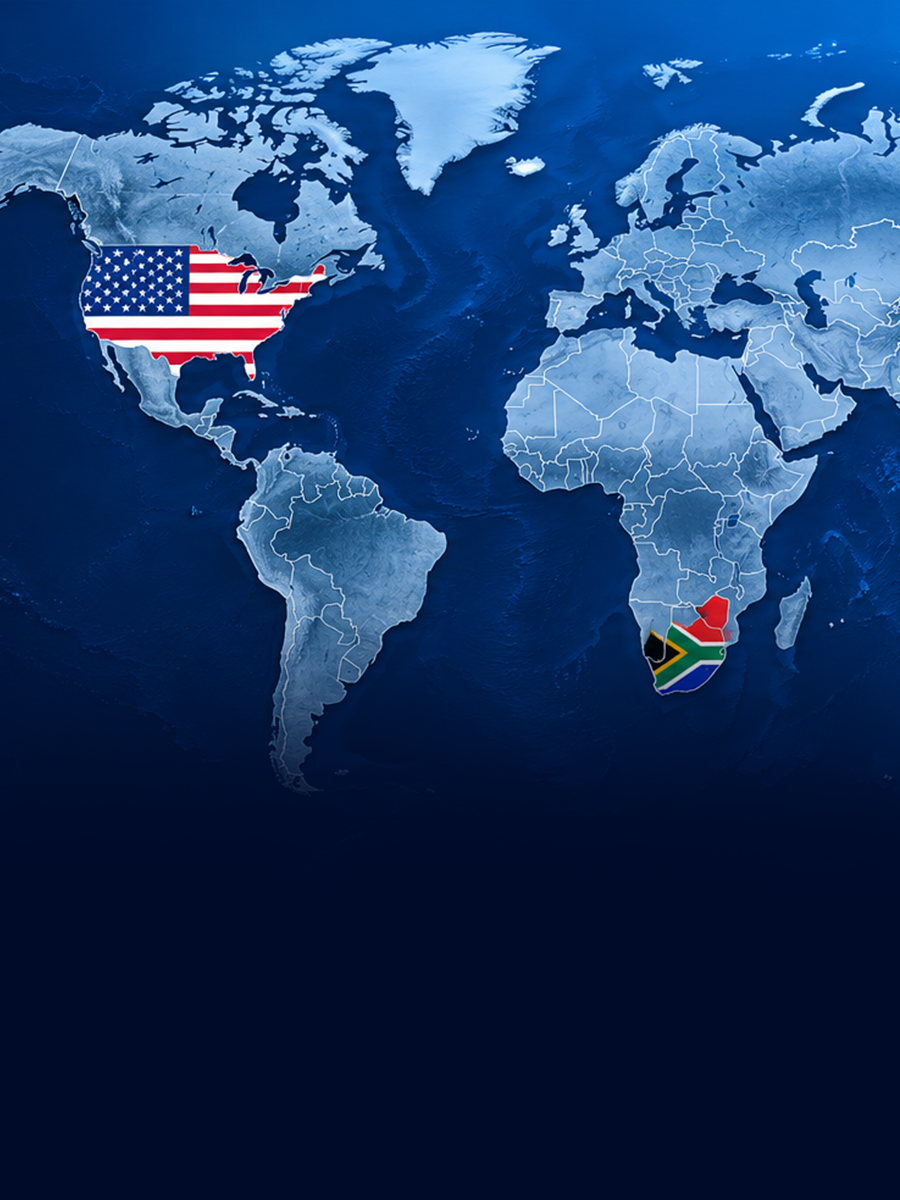


What happens inside the US supply chain does not stay inside the US supply chain. These four forces are already reshaping trade flows, carrier economics, and operating models across every continent.
Why This Matters Beyond American Borders
The United States remains the world's largest consumer market and the largest single-country importer of goods by value. When the US supply chain convulses, from tariff shifts to port disruptions to regulatory changes, the shockwaves reach every exporter, every carrier, every trading partner, and every freight forwarder managing lanes that touch American soil.
The Thomson Reuters Global Trade Report found that supply chain concerns among trade professionals doubled year over year heading into this year. The word they used most frequently to describe the operating environment was not "challenging" or "complex." It was "disruption."
Four forces are driving that disruption. Each one is significant in isolation. Together, they are rewriting the operating assumptions that global supply chains have relied on for the better part of two decades.
1. Tariff Complexity Has Become the Defining Variable in Global Trade
This is not a tariff environment. It is a tariff labyrinth.
Section 301 duties on Chinese goods. Section 232 tariffs on steel at 25 percent, aluminium at 10 percent, copper at 25 percent. The IEEPA Liberation Day framework layering additional tariffs on top of existing ones, pushing the cumulative rate on some Chinese imports above 145 percent. Temporary reductions creating front-loading surges as importers race to move goods before deadlines expire, followed by demand cliffs when the windows close.
The complexity is not just the rates. It is the velocity of change. Tariff schedules that held for years now shift in weeks. Trade professionals report that maintaining agreements with exporters has become significantly more difficult because the cost basis of a shipment can change between the time a contract is signed and the time the goods arrive.
How this reaches the rest of the world. When US tariffs make Chinese imports more expensive, the sourcing shift does not simply move to a cheaper origin. It cascades. Vietnamese factories that absorbed redirected demand from China are now at capacity, pushing lead times out and prices up for every buyer in the queue, not just American ones. Indian manufacturers fielding enquiries from US importers are simultaneously managing demand from European and Asian buyers who are navigating their own tariff adjustments. The reshoring and nearshoring wave, incentivised by US policy, is pulling manufacturing capacity toward North America and away from regions that built their export economies around serving global supply chains through China.
Every country that exports to the US is repricing risk, recalculating margins, and reconsidering which trade lanes justify the compliance burden. Every freight forwarder managing US-bound cargo is operating in a landed cost environment where the tariff component can exceed the freight component, and where a classification error is no longer an administrative correction but a financial event.
2. Cybersecurity Has Become a Supply Chain Risk, Not Just an IT Risk
There is a shift happening in how cyberattacks target logistics, and most of the industry has not fully absorbed its implications.
The attacks are no longer aimed primarily at stealing data. They are aimed at disrupting operations. Ransomware that locks a carrier's booking system. Malware that compromises a customs filing platform. Intrusions that target the middleware connecting a freight forwarder's TMS to their carrier network, their financial system, and their client portal.
The attack surface has expanded in direct proportion to the industry's digital transformation. Every API connection, every EDI link, every cloud-based platform, every third-party integration is a potential entry point. The more connected the operation, the more capable it is, and the more vulnerable it is if the connections are not secured.
Supply chain cyberattacks now target not just large corporations but specifically their third-party vendors and logistics software providers, because compromising one vendor can cascade access across dozens of connected clients.
How this reaches the rest of the world. Logistics is a networked industry. A cyberattack on a major US customs broker does not just affect US imports. It affects every exporter, every carrier, and every overseas agent connected to that broker's filing systems. A ransomware event that takes down a carrier's booking platform disrupts capacity allocation on trade lanes that span oceans. A breach of a freight forwarder's integration layer can compromise data flowing between partners across multiple continents simultaneously.
The interconnected nature of modern logistics means that cybersecurity is no longer a company-level risk. It is a network-level risk. And the weakest link in that network, wherever it sits geographically, determines the security posture of every partner connected to it. A freight forwarder in Johannesburg whose US agent suffers a breach is now dealing with the consequences in their own operation, their own client relationships, and their own compliance obligations.
3. The Workforce Crisis Is Structural, Not Cyclical
The US logistics workforce challenge has evolved beyond the familiar narrative of driver shortages and warehouse labour gaps. It is now a multi-layered structural problem that affects every level of the operation.
At the operational level, regulatory enforcement on CDL qualifications threatens to remove ten to fifteen percent of available trucking capacity. At the management level, an ageing leadership cohort is approaching retirement without a sufficient pipeline of successors who combine operational depth with the digital fluency the industry now requires. At the technology level, demand for supply chain professionals with AI-adjacent skills has surged nearly 400 percent since 2023, while 47 percent of supply chain organisations identify AI skills as their largest capability gap.
The workforce is being squeezed from three directions simultaneously: fewer people entering traditional logistics roles, more experienced people exiting through retirement, and a rapidly expanding skills requirement that the existing talent base was not developed to meet.
Supply Chain Dive captured the dynamic precisely: labour is no longer a stable input for supply chain leaders. It is a variable that needs to be planned for, invested in, and actively managed with the same rigour applied to carrier capacity and technology infrastructure.
How this reaches the rest of the world. The US workforce shortage does not stay domestic. When American logistics companies cannot fill roles locally, they look globally. Offshore operations centres, remote consulting teams, technology development hubs in India, Eastern Europe, and Southeast Asia are all absorbing demand that the US market cannot meet internally. That demand competes for the same talent pool that logistics companies in those regions need for their own operations.
The skills premium is also globalising. A CargoWise-certified professional in South Africa or the Philippines is now fielding offers from US, European, and Middle Eastern employers simultaneously. The freight forwarder in any geography that underinvests in developing and retaining their technical talent will find that talent being recruited away by organisations willing to pay the premium that global demand now commands.
4. The Capacity Environment Is Moving in Two Directions at Once
The US freight market is experiencing something unusual: two of its largest transport modes are moving in opposite directions simultaneously, and the interaction between them is creating planning complexity that most supply chain models were not designed to handle.
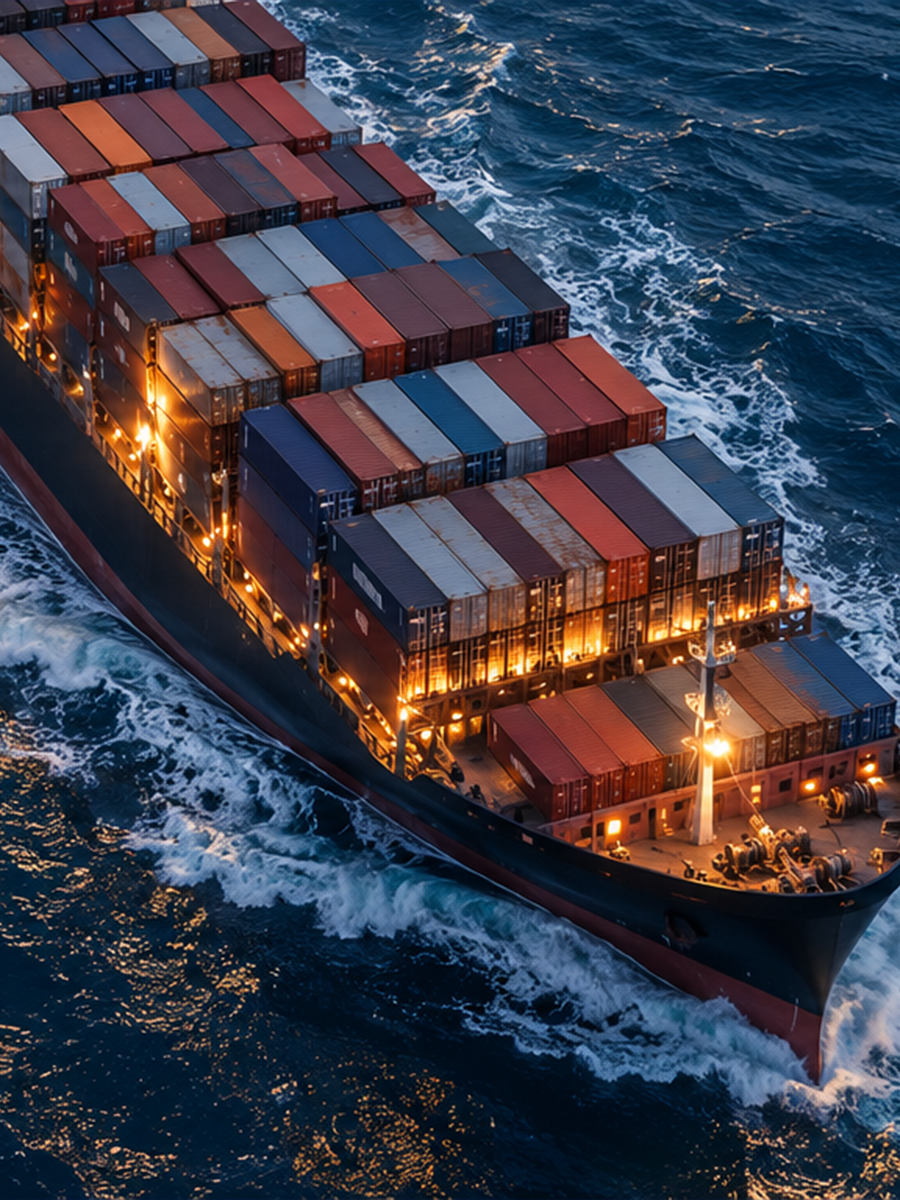
Ocean shipping is in structural overcapacity. Fleet growth hit 3.7 percent this year with eight percent projected for next year. Rates remain under pressure. Carriers are managing the surplus through blank sailings and service restructuring, but the fundamental imbalance between available capacity and demand persists.
Domestic trucking is tightening. The prolonged freight recession thinned the carrier base. Regulatory changes are removing driver capacity. Equipment costs are rising. Industry analysts warn that the survivability of the weakest operators diminishes with each passing quarter, and when the demand cycle turns, the capacity to serve it may not be there.
How this reaches the rest of the world. Ocean overcapacity is a global condition, not a US-specific one. When carriers have too many ships chasing too few containers, they redeploy vessels, restructure services, and adjust port rotations in ways that affect every trade lane, not just US-bound ones. A blank sailing intended to manage North American overcapacity removes capacity from an Asian feeder route that a shipper in Bangkok was counting on.
The domestic trucking squeeze creates a different global ripple. When inland US transport costs rise, the landed cost of imports increases regardless of how favourable the ocean rate was. An exporter in Germany pricing a contract for a US buyer needs to account for inland delivery costs that are becoming less predictable and more expensive. A freight forwarder quoting an end-to-end service into the US interior needs to build trucking volatility into the commercial model in a way that was unnecessary when the domestic market was oversupplied.
The divergence between these two modes means that optimising for one without accounting for the other produces a distorted cost picture. The ocean rate savings captured at the port can be entirely consumed by the trucking premium required to move the cargo to its final destination. The supply chains that model this interaction holistically will price accurately. The ones that treat ocean and domestic as separate decisions will keep being surprised by margins that look different at month-end than they did at the time of quoting.
The Common Thread
These four forces share a characteristic that distinguishes them from the supply chain challenges of previous years: none of them are temporary.
Tariff complexity is the product of a fundamental shift in US trade policy orientation that neither political party shows signs of reversing. Cybersecurity risk scales with digitalisation, which is accelerating. The workforce challenge is demographic and structural, driven by retirement rates, skills transformation, and a global competition for talent that intensifies as the industry becomes more technology-dependent. And the capacity divergence between modes reflects market structures, regulatory dynamics, and investment cycles that will take years to rebalance.
These are not disruptions to wait out. They are the new operating conditions. And they extend, through the mechanism of the world's largest import market, to every supply chain that touches American commerce.
The freight forwarders, shippers, and logistics service providers who build their operating models around these realities, with the tariff expertise, the cybersecurity posture, the workforce development discipline, and the multimodal planning capability to navigate them, will find that the complexity which paralyses others becomes the environment in which they perform best.
The rest of the world is watching what happens inside the US supply chain because what happens there does not stay there. It never has.
.png)
.png)

.png)

.png)






.png)
.png)






.png)

.png)

.png)



.png)







.png)



.png)












.png)












.png)





.png)
.png)